
What Is Bronco Test in Cricket: How It Works, Rules, and Why It’s Different from the Yo-Yo Test
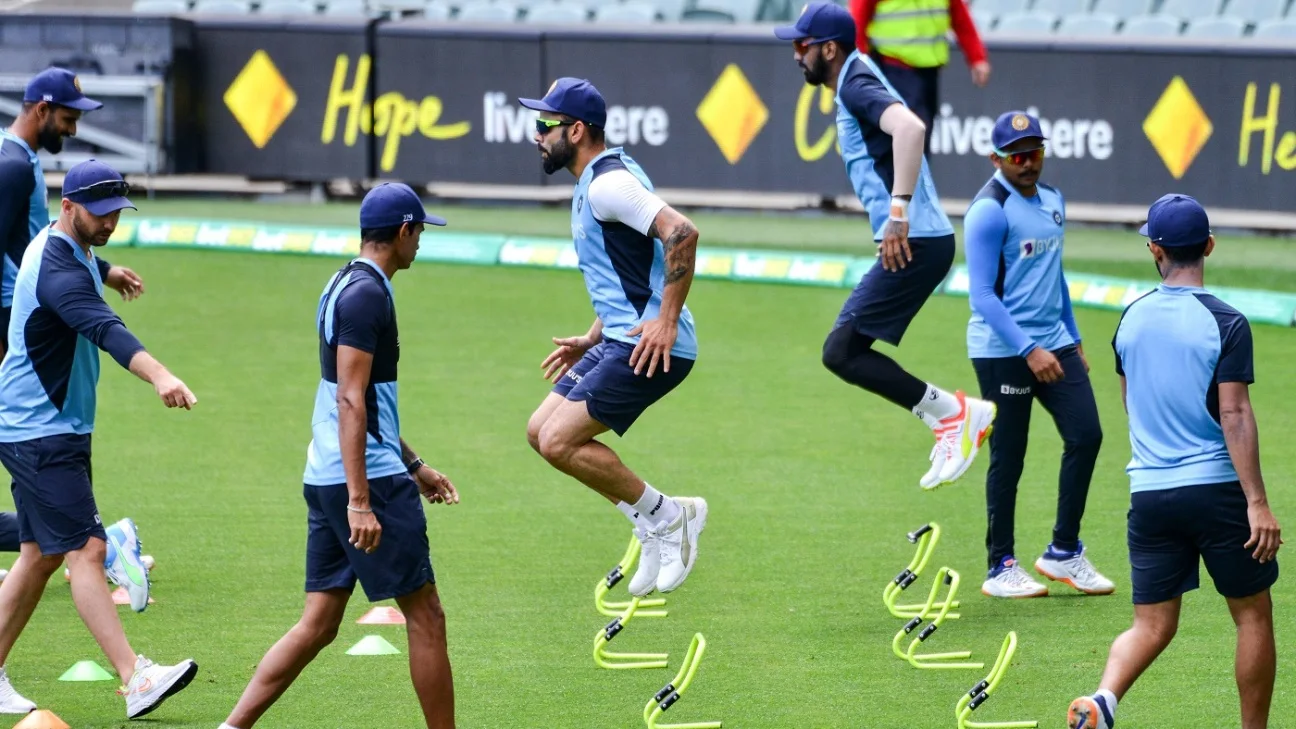
To improve fitness levels, Indian cricket head coach Gautam Gambhir and strength and conditioning coach Adrian le Roux have brought in the Bronco Test as a new standard. This will now be used along with the existing Yo-Yo Test and the 2-kilometre run.
The Bronco Test, which was first used in rugby, is a fitness test that checks a player’s stamina and heart endurance. By bringing it into Indian cricket, the focus is clearly moving more towards building endurance, especially for players like fast bowlers who need long-lasting energy and strength on the field.
Bronco Test Introduced to Raise Fitness Standards in Indian Cricket
The Bronco Test is a high-intensity aerobic running drill designed to measure a player's stamina, speed, and cardiovascular conditioning. It involves shuttle runs of 20, 40, and 60 meters. One set consists of running all three distances, and players are required to complete five continuous sets-totaling 1,200 meters-without rest. The goal is to finish the test within six minutes.
According to the Indian Express, several Indian players have already undergone the test at the BCCI's Centre of Excellence in Bengaluru, where it is currently being trialed as a standard measure of fitness.
The test was introduced on the recommendation of Adrian le Roux, who rejoined the Indian team as strength and conditioning coach in June 2025. Le Roux previously held the role from January 2002 to May 2003, and has also worked with Cricket South Africa and IPL franchises such as Kolkata Knight Riders and Punjab Kings.
According to The Indian Express, Le Roux suggested introducing the Bronco Test because there were concerns that Indian players, especially fast bowlers, were focusing too much on gym workouts and not enough on running and building stamina.
A source quoted in the report said: "The Bronco Test has been introduced at the Centre of Excellence. Some of India's contracted players have travelled to Bengaluru and have taken the test. It is being used to ensure there are clear fitness standards. Also, it was noticed that Indian cricketers, more so the fast bowlers, were not running enough and spending too much time in the gym. Players have been told that they will have to do more running."
Yo-Yo Test and Bronco Test: A Complete Fitness Check
The Yo-Yo Test has been an important part of Indian cricket’s fitness program since 2017, first brought in by strength coach Shankar Basu when Virat Kohli was captain. In this test, players have to run back and forth between two cones placed 20 metres apart, with the speed increasing as the levels go up. After every 40 metres, they get a 10-second break to recover. To clear the test, a player needs to reach at least the score of 17.1.
While the Yo-Yo Test focuses on interval recovery and agility, the Bronco Test is designed to assess continuous aerobic endurance. Together, the two tests offer a more comprehensive assessment of a player's overall fitness.
BCCI’s New Fitness Focus for Asia Cup 2025
The BCCI also uses a 2-kilometre run to test fitness. The targets are different for each role, fast bowlers need to finish it in 8 minutes 15 seconds, while batters, wicketkeepers, and spinners are given up to 8 minutes 30 seconds. This test helps measure how well players can maintain their stamina within a set time.
| Role | Time Benchmark |
|---|---|
| Fast Bowlers | 8 minutes 15 seconds |
| Batters, Wicketkeepers, Spinners | 8 minutes 30 seconds |
With the Asia Cup 2025 squad already named, fitness continues to be a big priority before the next set of matches. The introduction of the Bronco Test highlights a stronger focus on stamina and match-related fitness, particularly for players in demanding roles.
The BCCI is using the Bronco Test, Yo-Yo Test, and 2-kilometre run together to build a well-rounded fitness plan for players based on their roles. This shows how the game is getting more physically demanding and highlights the importance of Indian players keeping up with those standards regularly.
ALSO SEE: Asia Cup 2025: All 8 Teams’ Squads, Full Schedule, Venues & Key Highlights